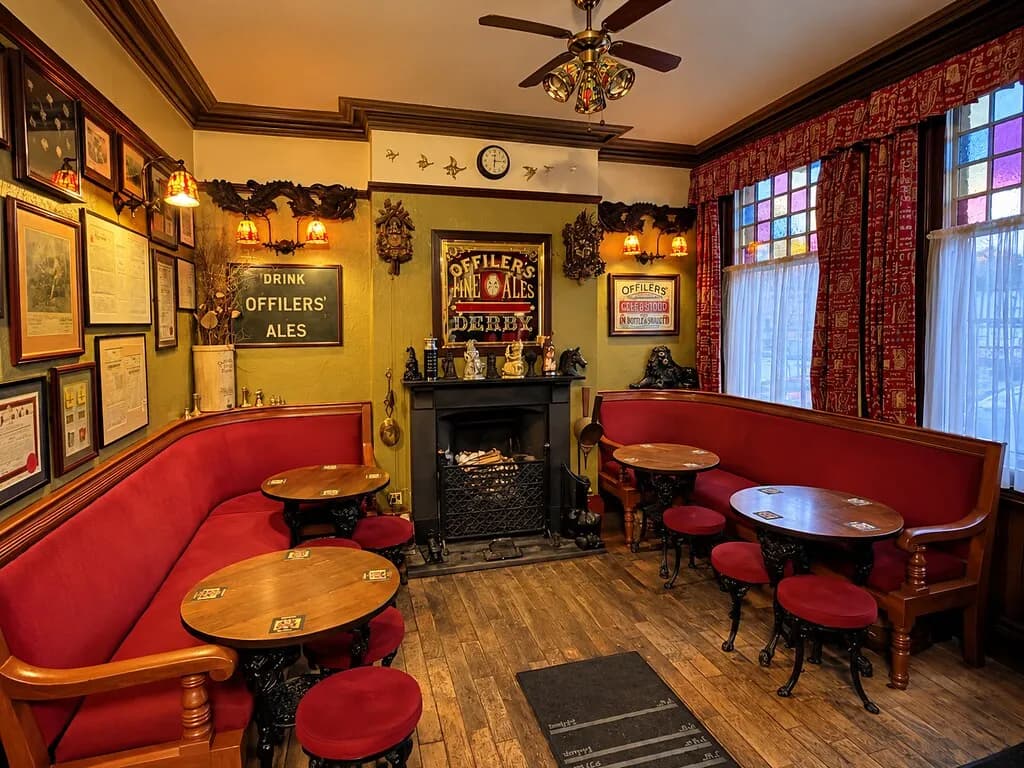
Discovering Derby: Historic Pubs, Railway Heritage and Real Ale
By Micropub Adventures
Derby is a city with plenty of history, some wonderful old buildings and a fantastic collection of traditional pubs. On Saturday 17 October, I headed over from West Yorkshire for a day exploring what the city has to offer, joined by Niall, who runs the popular Facebook page From Sheffield with Pubs.
Our plan was to discover some of Derby’s historic drinking places, visit a few independent venues and call into Derby CAMRA’s Heritage Beer Festival at the beautifully restored Market Hall. It turned into a brilliant day, with plenty of interesting places and stories along the way.
We started close to Derby railway station, where there’s a fantastic little collection of traditional pubs within a short walk of each other.
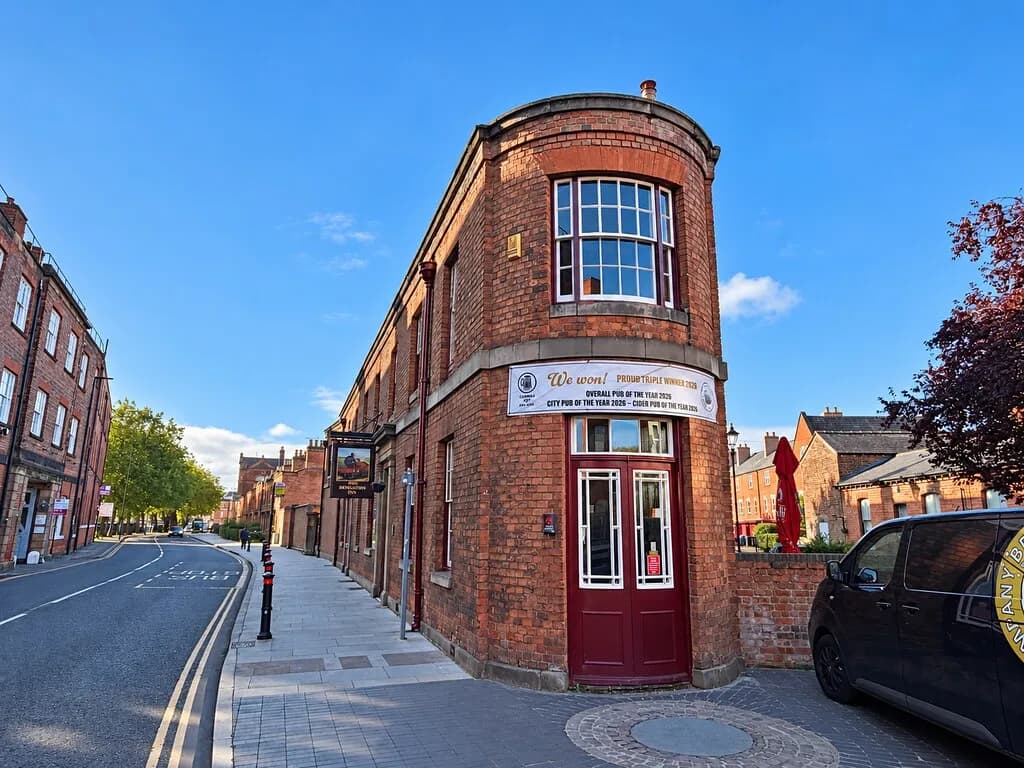
First was the Victoria Inn, a welcoming pub with a strong reputation for live music, followed by the Merry Widows next door. The latter occupies an unusual triangular building, previously known as Wright’s Vaults, and has recently become a Roebuck Brewery pub.
Just around the corner is the Brunswick Inn, one of my favourite discoveries of the day. Dating back to 1842, it was built to serve Derby’s growing railway community. The pub narrowly escaped demolition during the 1970s before eventually being restored and reopening in 1987.
Inside, there’s a wonderful collection of old railway photographs, memorabilia, cosy rooms and traditional wooden seating. It’s a lovely place to spend some time looking around, especially if you enjoy railway history.
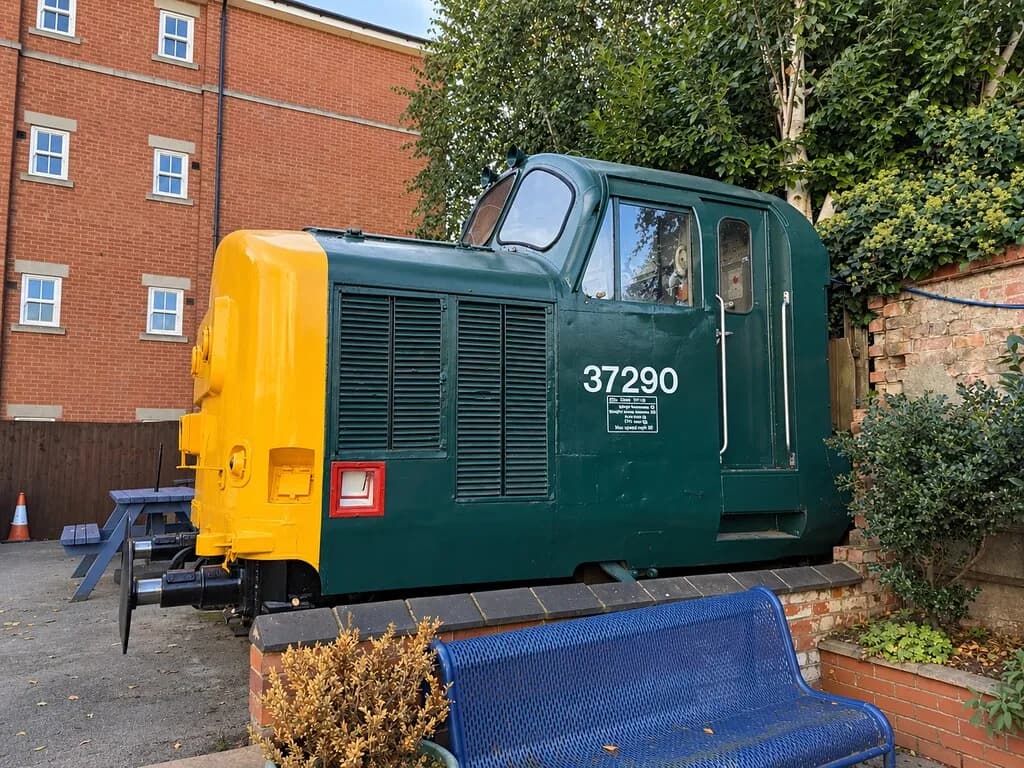
Nearby, the Alexandra Hotel has its own fascinating story. Built in 1871, this traditional railway pub was where Derby CAMRA was founded in 1974. There’s plenty of railway memorabilia inside, while the cab of an old Class 37 locomotive stands outside in the car park.
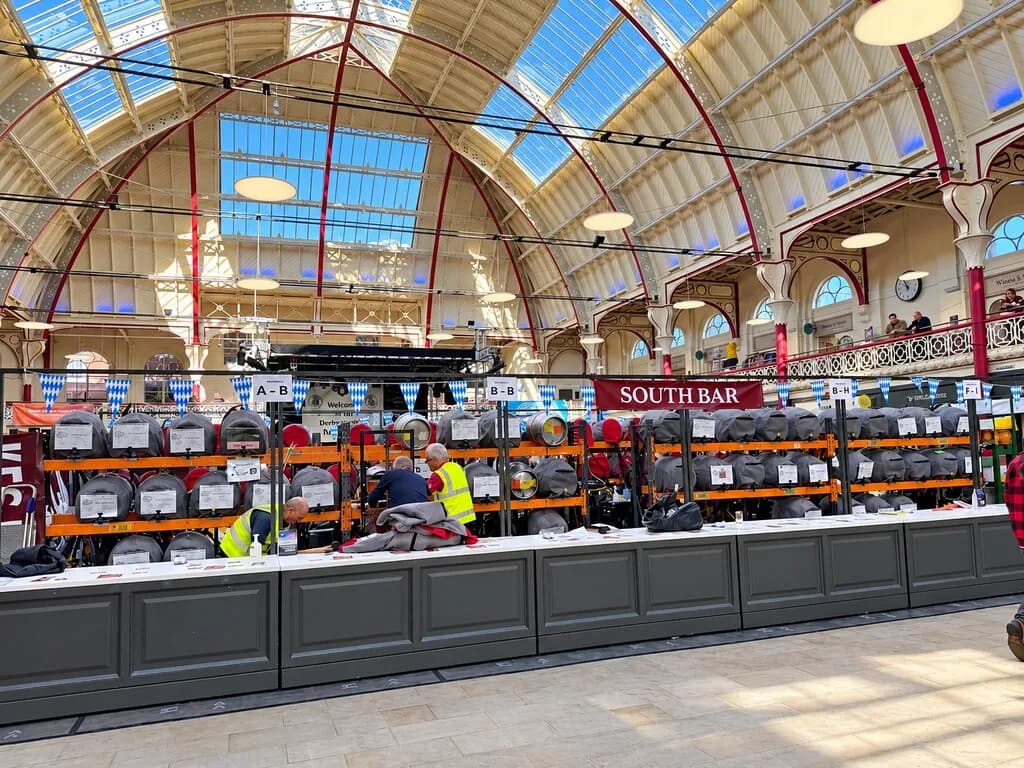
From there, we headed into the city centre for Derby CAMRA’s Heritage Beer Festival at the Market Hall.
The building first opened in 1866 and underwent a major restoration before reopening in 2025. With its impressive ironwork and wonderful Victorian architecture, it made a fantastic setting for the festival.
There were more than 100 beers available, including plenty from Derbyshire breweries. Independent food traders were also open throughout the hall, and it was lovely to see the building so busy. I particularly enjoyed trying Guildhall Pale from Derby’s Pour Me brewery, specially brewed for the festival.
After leaving the Market Hall, we headed towards Sadler Gate, one of Derby’s most attractive historic streets.
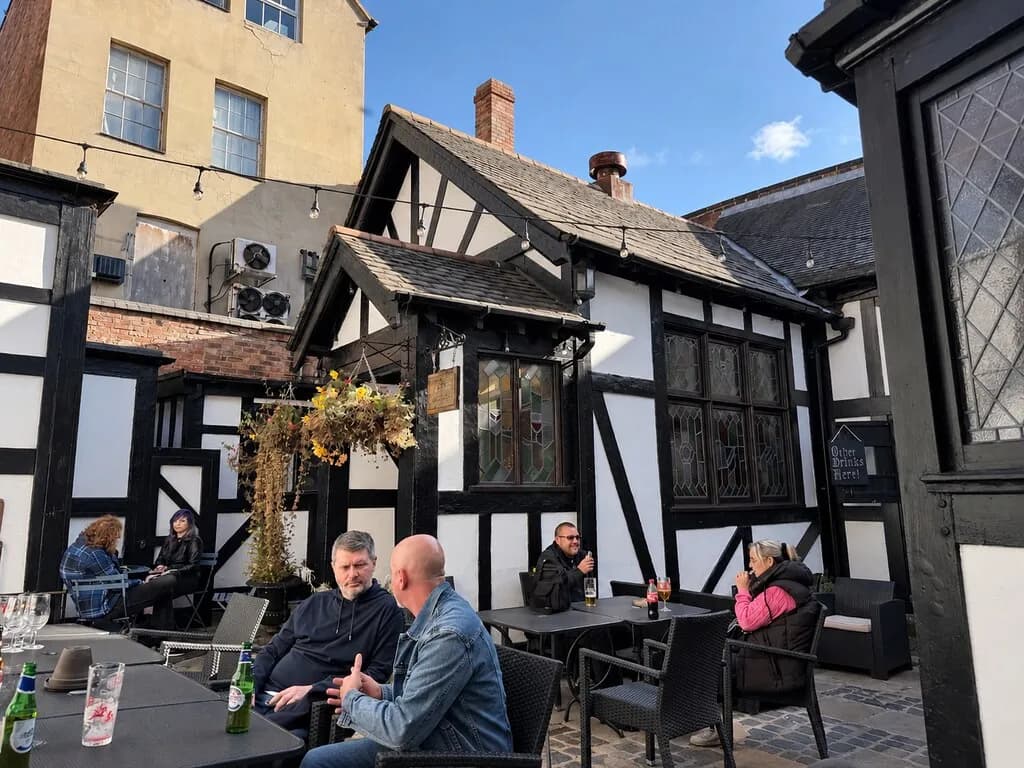
Here we visited the Old Bell Hotel, dating back to 1650 and regarded as Derby’s last surviving coaching inn. With its old wooden beams, beautiful rooms and cobbled courtyard, there’s so much history to discover inside.
Not far away was The Tannery, which opened in June 2026 in a lovely old building dating back to around 1825. Operated by Ashover Brew Co, it’s a great example of an older building finding a new use while keeping much of its character.
Our travels also took us to the Furnace Inn, formerly home to Shiny Brewery, and Little Chester Ale House, which first opened in 2012 as Derby’s first micropub. It’s great to see how smaller independent venues have become part of the city’s wider pub scene.
Another fascinating stop was the Seven Stars, one of Derby’s oldest pubs, with a building dating back to 1680. It once brewed its own beer, and one of its unusual features is an old well beneath the floor, visible through a glass panel.
We also visited the Five Lamps, named after the distinctive five-headed streetlamp nearby, and the Flowerpot, which has built a strong reputation for both real ale and live music.
Heading towards the River Derwent brought us to the Royal Standard, a Victorian pub with an interesting history, followed by the Exeter Arms, dating back to around 1816.
The Exeter Arms was particularly enjoyable, with its smaller rooms, old fireplaces and traditional character. It’s the sort of pub where you could easily settle down for an afternoon.
Another riverside stop was the Smithfield, originally known as the Cattle Market Hotel when it opened in 1840. Today, it’s well known for its real ale and has collected several Derby CAMRA awards over the years.
Our final stop was the Falstaff in Normanton, a lovely Victorian pub dating back to 1886. Known locally as ‘The Folly’, it has its own brewery, making it a fitting place to finish the day with a locally brewed pint.
What really stood out throughout our visit was the variety of Derby’s pubs. From old railway inns and historic coaching houses to independent micropubs and brewery taps, each has its own character and story.
There are so many interesting buildings to explore, and it’s lovely to see historic pubs continuing to play such an important part in the city.
Derby is certainly somewhere I’d recommend for anyone who enjoys traditional pubs, local history and real ale. With so much within walking distance of the railway station, it also makes a fantastic day out by train.
You can read my full Derby adventure, including individual pub histories and photographs, on my website:
https://micropubadventures.co.uk/2026/10/17/17-10-26-derby/
Micropub Adventures explores traditional pubs, micropubs, breweries and local history through days out by public transport across the UK.