In 1750, a Huguenot immigrant named Andrew Planché began making porcelain in Derby. Within seventy-five years, his workshop had secured a royal warrant, and it has supplied every British monarch since.
Today, Royal Crown Derby remains one of England's oldest surviving porcelain manufacturers, still producing bone china at its Osmaston Road factory after 275 years.
Georgian Beginnings
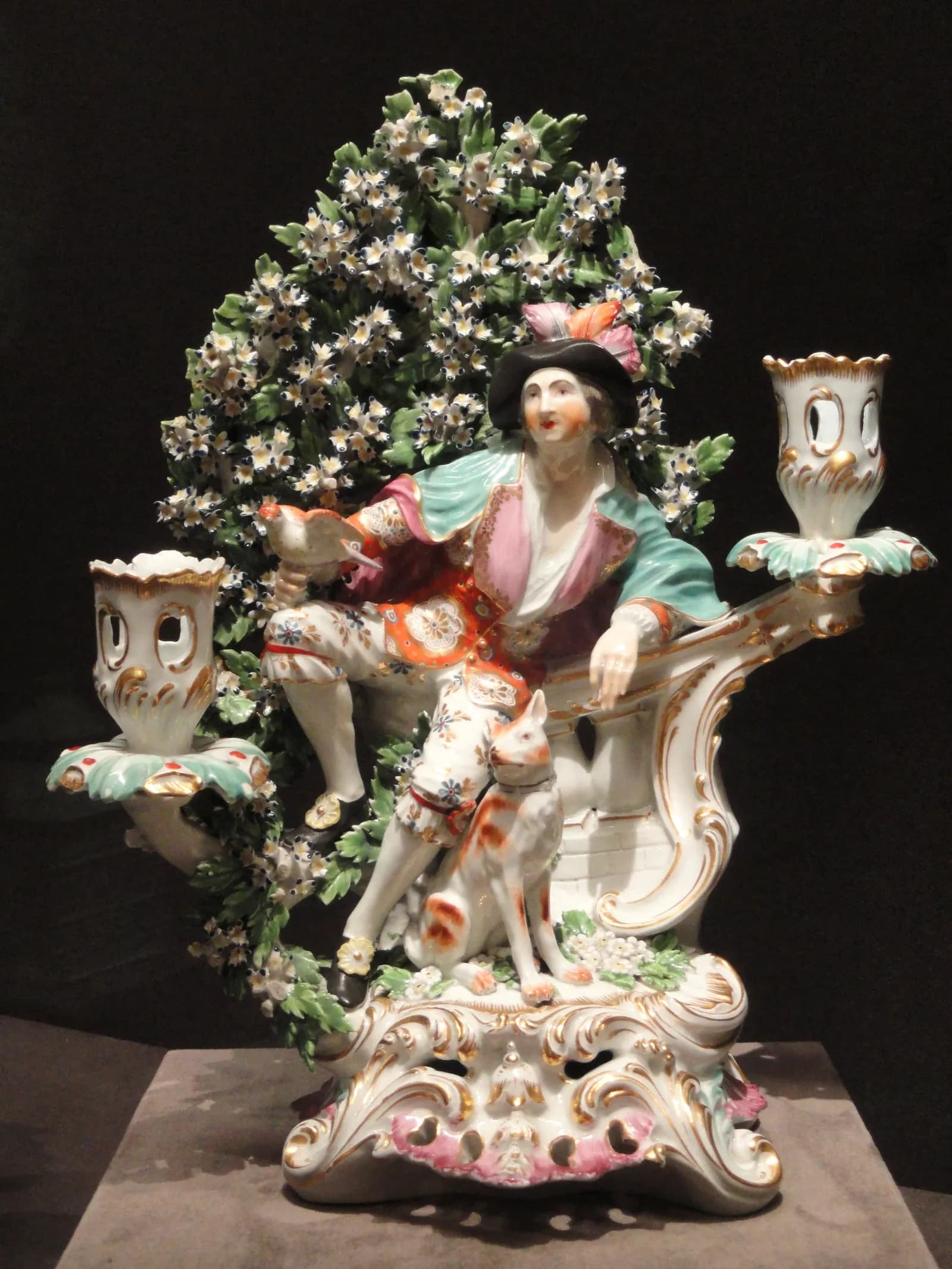
Andrew Planché, a French immigrant from Saxony, settled in Derby in 1745. By 1747 he was making soft-paste porcelain figurines and vases from the Cockpit Hill Potworks, just outside the town.
In 1756, Planché formed a partnership with William Duesbury, a porcelain painter formerly employed at the Chelsea porcelain factory, and John Heath, a local banker. This collaboration established a more formal production base on Nottingham Road. Duesbury proved an astute businessman; by 1770 he had acquired the Chelsea factory itself, transferring its assets to Derby when it closed in 1784. He also purchased the remnants of the Bow porcelain factory in 1776.
The Royal Connection
The firm's royal association began with the coronation of King George III in September 1761. A commemorative piece was created for the occasion, beginning a tradition that continues to the present day.
In 1773, King George III granted permission for the company to incorporate a crown into its backstamp. The business became known as 'Crown Derby' from this date. More than a century later, on 3 January 1890, Queen Victoria appointed the company as "Manufacturers of porcelain to Her Majesty" by royal warrant, permitting the use of 'Royal' in the title. The firm became The Royal Crown Derby Porcelain Company.
Surviving Adversity
The history of Royal Crown Derby is marked by closures and revivals. When the Nottingham Road factory closed in 1848, six former employees led by William Locker established a new works on King Street under Sampson Hancock. This 'Old Crown Derby China Works' operated independently until 1935.
Meanwhile, in 1877, a separate company called the Derby Crown Porcelain Company built a new factory on Osmaston Road. Royal Crown Derby acquired the King Street works in 1935, reuniting the two strands of Derby porcelain production.
Corporate ownership followed: in 1964, S. Pearson and Son acquired the company as part of the Allied English Potteries Group. The business returned to independence in 2000 when Hugh Gibson led a management buyout. In 2013, Steelite International of Stoke-on-Trent purchased the firm, but local ownership returned in 2016 when Kevin Oakes acquired the company. Oakes remains chief executive.
A Derby Institution Today
Royal Crown Derby continues to operate from its Osmaston Road premises at 194 Osmaston Road, where manufacturing has continued since 1877. The company employs approximately 300 people, making it a significant local employer.
The firm produces fine bone china using hand-painting and gilding techniques. Many pieces feature 22-carat gold and platinum decoration. The Old Imari pattern, first recorded in 1882 and designated pattern 1128, remains in production today. Other notable commissions have included a first-class dining suite for the RMS Titanic, commissioned on 31 January 1911, and a 'Royal Pinxton Rose' service presented to Queen Elizabeth II.
The Royal Crown Derby Visitor Centre operates at the factory, offering museum displays, factory tours, a gift shop, and a restaurant. The firm describes itself as "crafting the world's finest tableware in the heart of England".
Cultural Significance
Royal Crown Derby porcelain forms part of the collection at Derby Museum and Art Gallery, where it is displayed alongside works by Joseph Wright. The Victoria and Albert Museum holds early Derby pieces, including a creamware jug dated 1750 that confirms production at the Cockpit Hill works.
The company's archives document over twenty different backstamps from 1761 to the present, including date marks introduced in 1880. This lineage makes Royal Crown Derby not merely a manufacturer but a custodian of Derby's industrial and artistic heritage.